Choosing porcelain crowns is the first step to improving the aesthetics of your teeth and getting the beautiful smile you’ve always wanted. Determining what materials to go with is the second thing.
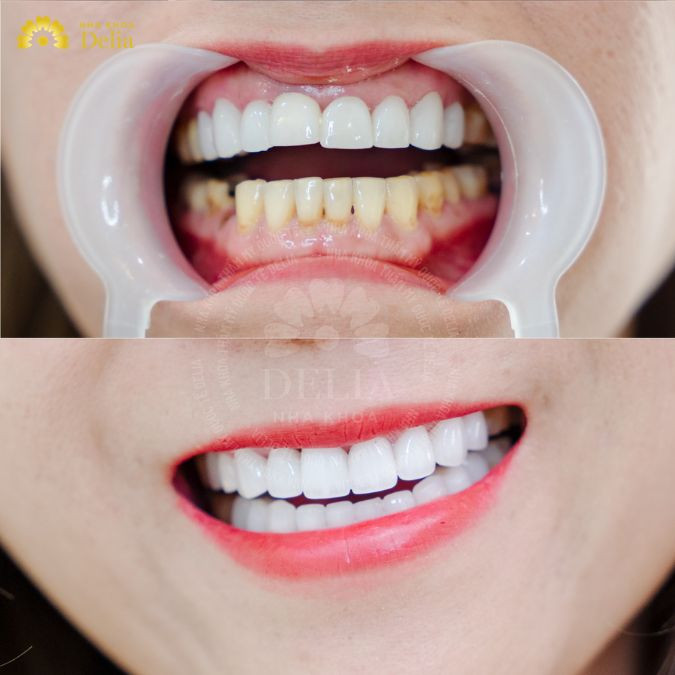
Composite resin and ceramic are the most commonly used materials in the veneer fabrication process. In the hands of an experienced cosmetic dentist, both of these materials can beautifully transform your smile. But how do you know which type is right for you? This depends on your specific needs and what factors are most important to you (cost, treatment time, etc.). Let’s evaluate some of the differences between composite veneers and ceramic veneers.
What are composite veneers?
Composite resin is a less expensive material that also matches the natural color of the tooth and is often used for veneers. Composite veneers can also be made in the laboratory, and the steps and procedures are the same as with ceramic veneers.

Composite veneers can also be made in the laboratory, and the steps and procedures are the same as with ceramic veneers
Another difference from ceramic materials is that this type of veneer can be made and placed by a dentist in just one visit, according to a study published by the Journal of Dental Research, Dental Clinic, dental outlook. After preparing and reshaping your teeth, your dentist will choose a tooth color and then attach the material directly to your teeth. This material hardens under a special light and bonds it securely to the tooth enamel. The final step is to smooth and polish the composite resin material to give the teeth a natural appearance.
The British Dental Association says composite veneers require less preparation, cost less and are easier to repair than ceramic veneers. Furthermore, it only takes a single dental visit to attach composite veneers, while completing porcelain veneers takes more time. These factors make composite resin veneers a useful option for younger patients. However, composite resin veneers may have a shorter lifespan and wear more easily than ceramic materials.
Advantages of composite veneers
Composite veneers have a number of advantages over porcelain, the main one being cost. On average, porcelain veneers are twice as expensive as composites, which is important for some people because most treatments are not covered by insurance, meaning you may have to pay out of pocket. Pay out of pocket for treatment. The cost of veneers varies based on a number of factors, but composites average between $250 and $1,500 per tooth. This can add up quickly during a smile makeover.

Composite veneers have a number of advantages over porcelain, the main one being cost
Another advantage of composite veneers over ceramic is that the composite can often be fabricated while you wait, making the treatment the same day. Direct composite veneers (also known as composite veneers) are actually sculpted onto your teeth, not in an outside laboratory. Dental polishing resin is applied directly to the tooth (hence the name) where it can be shaped and sculpted by a dentist. The shaping resin is hardened by high-intensity light, and additional layers of resin can then be applied and sculpted as needed to achieve the desired aesthetic result. Once finished, the resin must be polished to create a more natural tooth appearance. As a result, composite procedures tend to be less invasive and significantly faster than ceramic.
Arguably the biggest advantage of composite veneers over ceramic is reversibility. Porcelain requires reshaping your natural teeth to accommodate the porcelain veneer. When it comes to composite materials, minimal preparation work is required for your natural teeth, meaning they are not permanently altered to the point where the composite material cannot be removed and replaced when necessary.
Compare composite and porcelain veneer teeth
Material
Composite veneers are made from synthetic materials, while porcelain veneers are made from high-quality materials, so they will have more aesthetic advantages.
Porcelain veneers are considered a high-quality material, with high durability and good bearing capacity, providing optimal long-term use. In addition, the stain resistance and longevity of porcelain veneers are also superior to composite, bringing a natural smile to the user.

Porcelain veneers are considered a high-quality material, with high durability and good bearing capacity, providing optimal long-term use
In addition, composite porcelain crowns bring economic and convenient advantages because they shape directly on the teeth, suitable for problems such as gaps in teeth, chipped teeth, etc. After completion, the resin must be polished to create a more natural tooth appearance. As a result, composite procedures tend to be less invasive and significantly faster than ceramic. Porcelain will be suitable for cases where many teeth need to be reconstructed and provide a more aesthetic appearance.
Aesthetic factors
In terms of aesthetics, composite also brings a natural look thanks to the doctor’s way of customizing the color and restoring your teeth. The color of the composite is quite similar to the natural color of teeth. However, because it is made from synthetic resin, the brightness and shine are not as bright as porcelain porcelain.
As for the porcelain veneer surface, this is made from real porcelain and of course will match the color and naturalness very well. Helps bring a harmonious smile to your teeth.
Porcelain has a smooth, waterproof, stain-resistant surface and will help teeth maintain aesthetics when consuming foods such as coffee, cigarettes, etc. This helps maintain the original color of the veneer for a long time. long period of time and at the same time reduces the risk of stain formation and staining.
Thickness
The thickness of composite veneers typically ranges from 0.5 to 0.8mm, while porcelain veneers range from 0.5 to 1.0mm in thickness. This means that porcelain veneers have a greater thickness than composite veneers.

The thickness of composite veneers typically ranges from 0.5 to 0.8mm, while porcelain veneers range from 0.5 to 1.0mm in thickness
Therefore, With greater thickness, porcelain veneers require more tooth abrasion than composite porcelain veneers. This requires the dentist to remove a small amount of hard tissue from the tooth surface to create space for the porcelain veneer, ensuring correct and precise installation.
Choosing between composite veneers and porcelain veneers also depends on personal needs, tooth condition and dentist’s advice. If you have any concerns about tooth wear or the decision about veneer materials, Magic recommends that you discuss them specifically with your dentist to better understand the benefits and limitations of each type of veneer. and make appropriate decisions.
Reliability
Porcelain veneers are more durable than composite veneers. Because porcelain is a hard material, made of real porcelain, it can bite and chew comfortably. Therefore, porcelain porcelain can be used for a long time without being affected by daily eating.
The porcelain surface is smooth and waterproof, helping to prevent the absorption of stains and stains from food, drinks and tobacco. This helps maintain the original color and avoid stains on the porcelain veneer over a long period of time.
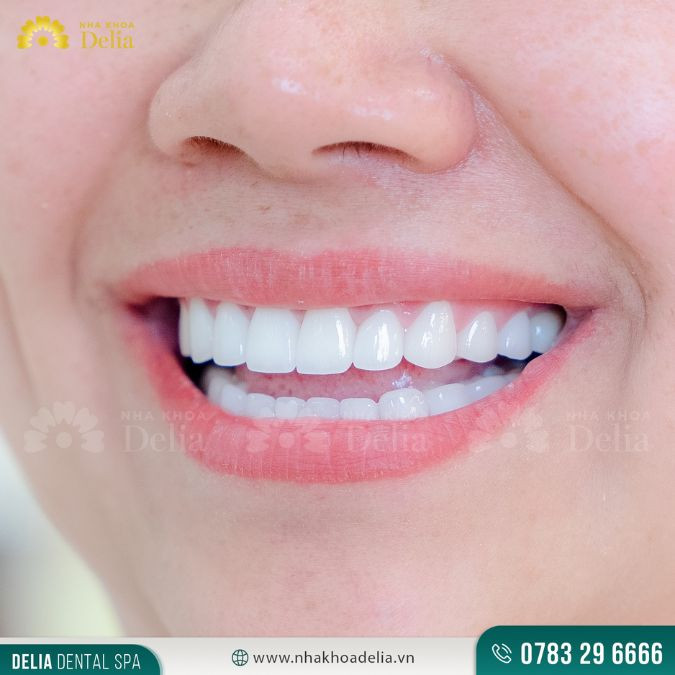
The porcelain surface is smooth and waterproof
However, both composite veneers and porcelain veneers can last up to several years if properly maintained and cared for. It is important to follow your dentist’s instructions and practice regular oral hygiene. This includes proper brushing, use of textile floss, and other oral care products to maintain the hygiene and health of the veneer.
Implementation process
The process of applying composite porcelain veneers is often much simpler than porcelain veneers. Composite veneers can be completed in a single session because the doctor will use available plastic materials. The process typically involves cleaning the tooth surface, applying the composite directly, and carefully shaping it to achieve the desired shape. The composite is then adjusted and finished, and after polishing, the composite veneer will have a natural and shiny appearance.
Besides, the process of applying porcelain veneer is more complicated and time-consuming. First, the teeth are prepared and a mold is taken to serve as a model for making porcelain veneers in the dental workshop. While waiting for the veneer to be officially completed, you can have a temporary veneer placed to protect and maintain aesthetics. After that, porcelain veneers will be made and attached to the teeth with specialized glue.
Price
The price of porcelain veneers is slightly higher than composite veneers due to the materials and more complex manufacturing process.

The price of porcelain veneers is slightly higher than composite veneers
Composite veneer is made from synthetic resin, a material with low production costs and a simple process. Therefore, composite veneer also has a lower cost.
Porcelain, on the other hand, is made from inorganic ceramic with high hardness and durability. The process of making porcelain veneers includes taking dental molds, manufacturing them in the dental workshop, and the finishing process is quite complicated. All of these factors contribute to the higher cost of porcelain veneers compared to composite veneers.
If you have become self-conscious about your smile, porcelain crowns may be a great option for you. They are essentially a semi-permanent solution for imperfect teeth. Because veneers – even composite veneers – are relatively expensive, take the time to explore your options and the pros and cons of each before you decide. Talk to your dentist about the best choice.