Losing a tooth can have a significant impact on both your appearance and oral health. Fortunately, modern dentistry offers a variety of solutions to restore your smile, and one of the most popular options is the partial dental bridge. To answer the question of partial dental bridges, let’s go to the article with Delia Dental to understand clearly!

What is a partial bridge dental
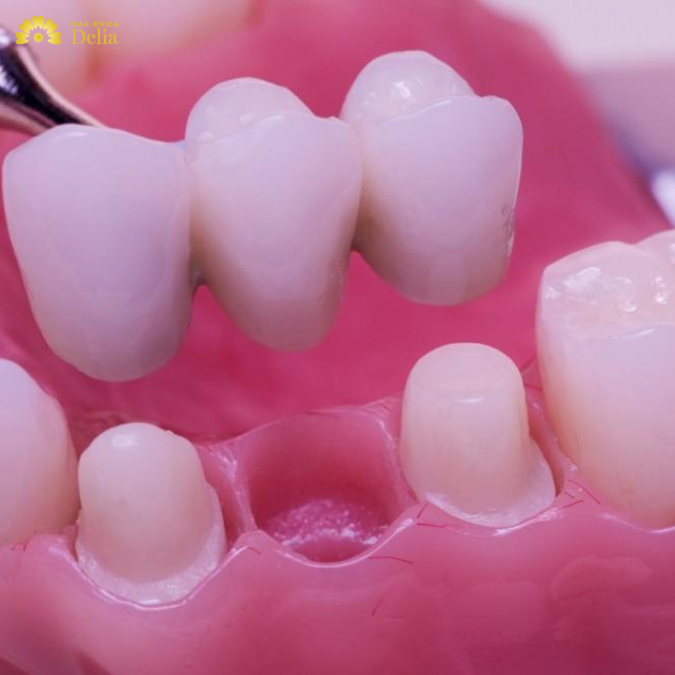
A partial dental bridge is a dental prosthetic designed to replace one or more missing teeth. Unlike a full bridge, which is used when all teeth in a specific area are missing, a partial bridge is designed to fill in the gap caused by one or a few missing teeth. It attaches to the remaining natural teeth using dental crowns or other supporting structures, providing a stable and durable replacement.

Components of a Partial Bridge. A typical partial bridge consists of:
- Pontic: The false tooth that fills the gap left by the missing tooth.
- Abutment Teeth: The adjacent natural teeth that anchor the bridge in place, often requiring dental crowns for support.
- Wing or Clasp (in some cases): A clasp may be used to secure the bridge to remaining teeth when traditional crowns are not an option.
How does a partial dental bridge work?
A partial dental bridge works by bridging the gap created by missing teeth. The process typically involves several steps:
- Consultation and Examination: Your dentist will assess your oral health, examine the condition of your remaining teeth, and take X-rays to determine if a partial bridge is the best solution.
- Preparation of Abutment Teeth: If necessary, the abutment teeth will be prepared by shaping them so that crowns can be placed over them. This ensures a snug and secure fit for the bridge.
- Impressions: After the preparation, impressions of your teeth will be taken to create a custom bridge that matches your bite and natural teeth.
- Fabrication of the Bridge: A dental laboratory will create the bridge based on the impressions. This may take a few weeks, and in the meantime, your dentist may place a temporary bridge.
- Placement of the Permanent Bridge: Once your permanent partial bridge is ready, your dentist will carefully place and adjust it to ensure proper fit, comfort, and function.

Benefits of partial dental bridges
Partial dental bridges come with several advantages, making them an appealing option for many people with missing teeth.
Improved Aesthetics
A partial bridge restores your smile by filling in the gaps left by missing teeth. The replacement tooth is designed to blend seamlessly with your natural teeth, giving you a more attractive and natural-looking smile.
Enhanced Functionality
A missing tooth can make it difficult to chew and speak properly. A partial bridge improves the functionality of your mouth, allowing you to chew and speak with ease, just like with natural teeth.
Prevents Shifting of Remaining Teeth
When a tooth is lost, the adjacent teeth may begin to shift toward the empty space, leading to misalignment and potential bite problems. A partial bridge helps prevent this by maintaining the position of the remaining teeth.
Durability and Long-Lasting Results
Partial bridges are designed to be durable and can last for many years with proper care. Materials such as porcelain, ceramic, or metal alloys are commonly used for their strength and longevity.
Non-invasive Option
Compared to other tooth replacement options like implants, partial bridges require less invasive procedures. There’s no need for surgery or bone grafting, making it a more affordable and less complex solution.
Types of partial dental bridges
Partial dental bridges come in several types, each with its own advantages and considerations. The main types include:
Traditional Partial Bridge
The traditional partial bridge involves using dental crowns on the abutment teeth to secure the false tooth in place. This is the most common type of partial bridge.

Cantilever Partial Bridge
In cases where there is only one adjacent tooth to support the bridge, a cantilever partial bridge may be used. The bridge is anchored to just one abutment tooth, offering a solution when there are limited healthy teeth on either side of the gap.

Resin-bonded Partial Bridge
Also known as a Maryland bridge, this type involves attaching the false tooth to the adjacent teeth using a metal or porcelain framework. The resin-bonded bridge requires less tooth reduction and can be a great option for front teeth.

Flexible Partial Bridge
This bridge uses a flexible material, often nylon-based, to provide a more comfortable fit. It’s often used when aesthetics and comfort are a priority, such as for people with missing teeth in the back of their mouth.

Caring for your partial dental bridge
The cost of a partial dental bridge can vary depending on several factors, including the type of bridge, the materials used, the number of teeth being replaced, and your geographic location. At Delia Dental the average cost ranges from $500 to $1700 for 16 teeth and up.. Dental insurance may cover part of the cost, and many dentists offer payment plans to make the procedure more affordable.
When is a partial bridge dental right for you?
A partial bridge dental solution may be ideal if you have one or a few missing teeth and want to restore both function and appearance. However, it may not be suitable for everyone. If you have severely damaged or decayed adjacent teeth, your dentist might recommend other options like dental implants.
It’s essential to discuss your options with your dentist to determine the best solution based on your needs, oral health, and budget.

Conclusion
Above is all the information about partial dental bridges that Delia Dental has just provided for you, hopefully with the above information will help you identify dental bridges. If you have any questions, please contact Delia Dental via hotline: 0763 29 6666 for advice and help from medical experts!